





Written by:

Medically Reviewed by:
Last Updated:
May 19th, 2026
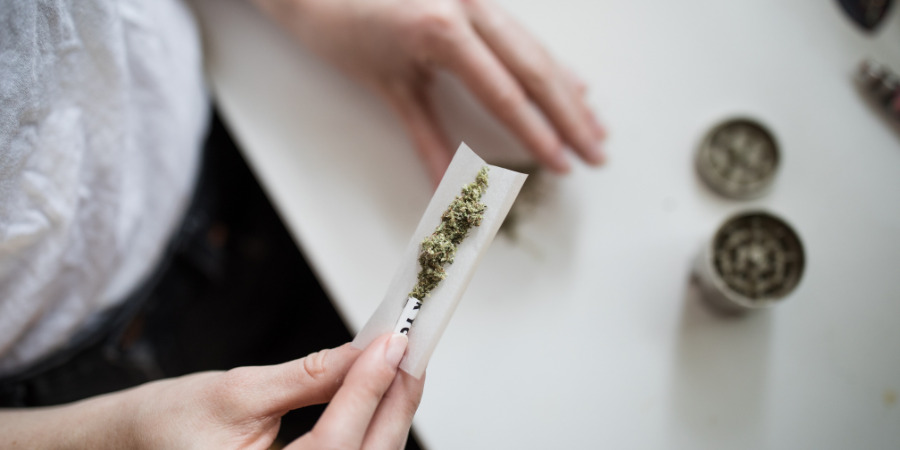
There’s an entire genre of comedy built around the idea that cannabis makes you completely unmotivated. In Cheech and Chong, Harold and Kumar, and Pineapple Express, the “stoner” is always the same guy, slumped on a sofa at 4 pm, unable to do anything more demanding than finding the telly remote. The image of this cannabis-induced laziness has been around so long that scientists gave it a name: amotivational syndrome. But is it even true?
The stereotype versus the science
The term “amotivational syndrome” dates back to the 1960s, when psychiatrists studying heavy cannabis users in Jamaica and elsewhere noticed a pattern. Young men who had seemed ambitious became apathetic, lost interest in work and long-term goals, and appeared content to just drift along. The explanation that cannabis was draining their motivation seemed obvious, and the idea stuck and shaped how weed was discussed for decades after.
When researchers actually tested this properly, however, the findings were more complicated than the stereotype suggests. A 2024 review looked at studies where people were given behavioural tasks measuring effort and motivation. Most found no difference between cannabis users and non-users.
But the review also noted that those studies were mostly comparing cannabis users to non-users at a single point in time. When researchers looked specifically at people who had become dependent on cannabis, they did find higher apathy. And when they followed the same people over the following months and years, those who increased their cannabis use became less likely to start things and follow through on them.
So does cannabis affect long-term ambition? The answer seems to depend on how much you’re using, how often, and whether you’ve become addicted to cannabis.
What happens to motivation when you’re high
The effects of cannabis on short-term motivation are clearer. While you’re high, studies have found that THC does seem to temporarily affect how much effort you’re willing to put in for rewards.
Two studies gave participants THC and then measured their choices. Both found that they chose easier options with smaller payoffs rather than harder tasks with bigger rewards. This effect then wore off as the cannabis left their systems.
On its own, that might not matter much, but if you’re using cannabis most days, you’re spending a lot of time in that low-effort state. When you’re repeatedly choosing the easier option, the effects start to accumulate. The school project that could wait until tomorrow or the work email you’ll deal with later starts to build up, and that can really begin to affect your life.
People often don’t see this while it’s happening, and it’s only when they look back that they recognise a year has passed and that time and opportunities have been wasted.
If you can see this happening in your own life, if you’ve tried to cut down or stop, and it hasn’t worked, you may be dependent on cannabis. Cannabis addiction professionals like our teams at Linwood House can help you quit weed and get back into more productive habits.
What cannabis does to your brain
The cannabis “high” comes partly from the relationship between cannabis and dopamine. When you smoke weed or eat an edible, THC triggers dopamine release in your brain’s reward centres, which contributes to the pleasurable feeling.
The problem comes with regular cannabis use. Research has found that long-term heavy cannabis users still release dopamine, but their brains respond less strongly to it. One study gave cannabis users methylphenidate, a drug that normally boosts dopamine and makes people feel good. The cannabis users felt less of a response than non-users did, even though their dopamine levels rose about the same amount.
That’s why everyday satisfactions like food or spending time with people you like stop feeling rewarding. The dopamine is still there, but your brain has stopped reacting to it normally. Cannabis starts to feel like the only thing that produces any real pleasure, because you’ve trained your brain to underreact to everything else.

The long-term effects of cannabis
Pinning down lasting effects is harder. People who use cannabis heavily often have other things going on, including depression, anxiety, or other substance use. Separating what cannabis use causes from what it exists alongside takes careful research.
Still, research tracking people over an extended period usually finds the same trends. One study followed college students and found that cannabis use predicted lower initiative and persistence a month later, even after accounting for factors like personality and alcohol abuse.
But what does that look like in practice?
Initiative is what gets you started, the ability to begin a task without someone else pushing you. Persistence is what keeps you going when the task gets boring or difficult. When these erode, you don’t suddenly become incapable. You’re just less likely to start things and more likely to stop doing them halfway. This reflects in the dissertation that stalls after the first chapter, and the job applications you keep meaning to send. You’re still capable, but you don’t follow through.
While this doesn’t necessarily prove that cannabis caused the change, it fits what a lot of people describe when they look back honestly: a gradual loss of drive that happened so slowly they barely noticed it happening.
These studies also suggest timing matters. People who started younger showed stronger associations with problems later. The brain keeps developing through adolescence and into the early twenties, and regular THC during that window may leave different marks than use that starts later.
The difference with medical cannabis
Someone using prescribed cannabis for chronic pain or treatment-resistant epilepsy is in a different situation from someone smoking daily because the evenings feel empty. The doses and compounds are often different, and the use is carefully supervised. This should usually mean that the effects on motivation aren’t the same, and whatever trade-offs exist are being weighed against genuine medical need.
This article is about recreational use that may have become a problem. If you’re using cannabis under medical supervision, any concerns about motivation should be discussed with your doctors.
The difference between cannabis use and dependence
There is a big difference between someone who smokes weed occasionally and someone who has become dependent on cannabis. Where you sit on that spectrum affects what you’re likely to experience.
Dependence on the drug is where the problems show up. The studies that found no amotivational syndrome were mostly looking at people who used cannabis regularly but weren’t dependent. For those people, lasting motivational changes seem to be rare.
But when your brain has adjusted to expect cannabis, it changes things. You feel bored or restless without cannabis, need to smoke first thing in the morning, and can’t go through any activity without using cannabis first. That change often happens so gradually that you don’t notice until someone points it out or you try to stop and find it harder than you expected.
But how do you know if cannabis is getting in the way of what you want from life? Think about whether the activities you used to enjoy now feel boring unless you’re high. Do you make plans and then abandon them on a whim? Have you given up on goals that mattered a year ago without you even realising? Are you spending more time thinking about when you’ll next get high than about what you’re supposed to be doing now?
None of this proves anything on its own, but if a few of them are true for you, you may need professional help for cannabis addiction.
If you’re ready to talk
If cannabis addiction or abuse is affecting your life, Linwood House cannabis addiction support can help you work out what’s going on and what your options are.
Get in touch with us when you’re ready, and we can talk it through together.
(Click here to see works cited)
- Lac, Andrew, and Jeremy W. Luk. “Testing the Amotivational Syndrome: Marijuana Use Longitudinally Predicts Lower Self-Efficacy Even After Controlling for Demographics, Personality, and Alcohol and Cigarette Use.” Prevention Science, vol. 19, no. 2, 2018, pp. 117–26, https://pmc.ncbi.nlm.nih.gov/articles/PMC5732901/.
- Martz, Meghan E., et al. “Association of Marijuana Use With Blunted Nucleus Accumbens Response to Reward Anticipation.” JAMA Psychiatry, vol. 73, no. 8, 2016, pp. 838–44, https://pmc.ncbi.nlm.nih.gov/articles/PMC4972653/.
- Office for National Statistics. “Drug Misuse in England and Wales: Year Ending March 2024.” GOV.UK, 2024, https://www.gov.uk/government/statistics/drug-misuse-in-england-and-wales-year-ending-march-2024.
- Skumlien, Martine, et al. “Is Cannabis Use Associated with Motivation? A Review of Recent Acute and Non-Acute Studies.” Current Behavioral Neuroscience Reports, vol. 11, 2024, pp. 1–13, https://link.springer.com/article/10.1007/s40473-023-00268-1.
- Volkow, Nora D., et al. “Decreased Dopamine Brain Reactivity in Marijuana Abusers Is Associated with Negative Emotionality and Addiction Severity.” Proceedings of the National Academy of Sciences, vol. 111, no. 30, 2014, pp. E3149–56, https://www.pnas.org/doi/10.1073/pnas.1411228111.