





Written by:

Medically Reviewed by:
Last Updated:
July 15th, 2026
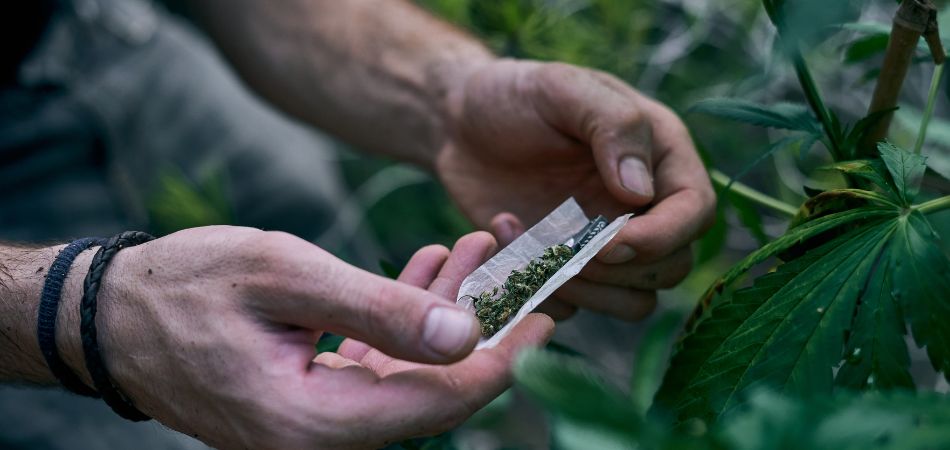
The safety of cannabis use has been widely debated for decades. Some people believe cannabis is harmless, while others warn of serious mental health risks of cannabis abuse. The truth is complex, and partly depends on the person using cannabis as much as the drug itself. For some people, particularly those with certain vulnerabilities, cannabis use can trigger or contribute to serious mental health issues. Psychosis is one of the most concerning possibilities, and while it remains relatively uncommon, the link between cannabis and psychosis is real and well-researched.
What is psychosis?
Psychosis is not a mental health condition itself, but a set of symptoms that means you lose touch with reality. Someone experiencing psychosis may have hallucinations, which means seeing or hearing things that are not there. They may also develop delusions, which are strongly held beliefs that have no basis in fact, such as believing they are being watched or persecuted. Thinking can become disorganised and hard to follow, and the person may not realise that anything is wrong. These experiences can be frightening both for the person going through it and for those around them.
How can weed cause psychosis?
To understand the links between cannabis and psychosis, it helps to understand what happens in your brain when you use cannabis. The main psychoactive compound in all forms of cannabis is delta-9-tetrahydrocannabinol, more commonly known as THC. This is the chemical responsible for the high, but it is also the one most closely linked to psychotic symptoms.
Your brain has its own system for staying in balance, called the endocannabinoid system. It works through a network of receptors and naturally occurring chemicals that help regulate your mood, perception, memory, and how you think. The CB1 receptors, which are found throughout the parts of your brain that handle thinking, emotion, sensory processing, and memory, are a key part of this system. Under normal circumstances, your body produces its own cannabinoid-like chemicals that bind to these receptors and keep these processes running smoothly.
When you use cannabis, THC enters your brain and binds to these same CB1 receptors. The problem is that THC activates the receptors in a less controlled way, and it floods your system rather than gently regulating it. This overstimulation can disrupt the balance your brain needs to function normally. This can produce the kind of distorted experiences that some people describe after using cannabis, including visual changes, anxiety, paranoia, and feelings of unreality.
The role of cannabis dopamine effects
One of the most important ways that THC affects the brain is through its impact on dopamine. Dopamine is a brain chemical involved in motivation and reward, but it also plays a central role in how we perceive reality.
A 2025 brain imaging study looked at people who used cannabis heavily. In conditions like schizophrenia, dopamine signalling in certain brain regions is thought to be overactive, and this contributes to hallucinations and delusions. The study showed evidence that the heavy cannabis users had higher dopamine activity in the same parts of the brain affected in psychosis.
This is part of why THC mental health effects can be particularly serious for people who are already vulnerable. The brain’s dopamine system is not able to handle the kind of stimulation that high-dose THC provides, and in some people, this can push the system into a state where psychotic symptoms emerge.

Why high-potency cannabis carries a greater risk
Not all cannabis is the same, and over the past two decades, the THC concentration in many cannabis products has increased dramatically. What was once a relatively mild drug has become something far more potent, and the high THC risks have increased accordingly.
Research published in 2019 looked at over 900 people experiencing psychosis for the first time, across 11 cities in Europe and Brazil. The study found that daily cannabis use was associated with more than three times the odds of developing a psychotic disorder. However, when users consumed high-potency cannabis containing more than 10% THC, the odds rose to nearly five times as high. In cities where high-potency cannabis was widely available, a large share of new psychosis cases were linked to daily high-potency use.
This suggests that it is not simply whether you use cannabis that matters, but how often and how strong it is. High-potency products, including concentrates and extracts that can contain THC levels well above 20%, carry a much greater risk than lower-potency forms. The more THC that enters your brain, the more intense the disruption to your endocannabinoid and dopamine systems, and the higher the chance that something will go wrong.
Risk factors for cannabis-induced psychosis symptoms
Not everyone who uses cannabis will experience psychotic symptoms, but some people are at much higher risk than others.
A family history of psychotic disorders is one of the strongest risk factors. For example, research has found that people who were genetically more prone to schizophrenia were much more likely to experience psychosis if they also used cannabis.
Age of first use also matters enormously. The brain continues to develop well into your mid-twenties, and the prefrontal cortex, which handles impulse control, decision-making, judgement, and emotional regulation, is one of the last parts to fully develop. Cannabis use during adolescence interferes with this development, and studies have shown that using cannabis before the age of 15 or 16 is associated with a notably higher risk of developing psychosis later in life.
Heavy and frequent use compounds these risks. If you use cannabis every day over a period of years, the repeated disruption to your brain chemistry increases the likelihood that problems will emerge.
How to recognise the warning signs
Cannabis-induced psychosis symptoms can range from mild and fleeting to severe and prolonged. Understanding what to look for can help you recognise when something is wrong.
Intense anxiety, weed paranoia and hallucinations are among the most common signs. Paranoia involves an intense and irrational fear that others are watching you, talking about you, following you, or intending to harm you. Hallucinations may involve hearing voices or seeing things that are not there. Both can be incredibly scary and may persist even after the high wears off, or you stop using cannabis.
Other warning signs include disorganised thinking, where thoughts become jumbled and hard to follow, and incoherent speech. You may also experience a loss of insight, which means you don’t recognise that your experiences are unusual.
How long do THC mental health effects last?
For many people, the symptoms of cannabis-induced psychosis are temporary. Research suggests that more than half of those who experience psychotic symptoms linked to cannabis find that they resolve within 24 hours. For others, the symptoms may persist for days or weeks but eventually clear once cannabis use stops.
However, the picture is not always so reassuring. One study that followed over 500 patients who had been treated for cannabis-induced psychotic symptoms found that nearly 45% went on to be diagnosed with a schizophrenia-spectrum disorder over the years that followed. For some people, what starts as a temporary episode may be the first sign of a longer-term problem. The risk of this happening is higher in those who continue to use cannabis after an initial episode, and in those who have the other risk factors explained above.
Get help with cannabis problems today
If you are worried about how cannabis is affecting your mental health, or if you have experienced any of the warning signs described here, it is important to seek support. Linwood House offers confidential advice and evidence-based cannabis addiction treatment to help you understand your risks and make changes that protect your wellbeing. We can help you quit cannabis safely through cannabis detox and cannabis rehab and help you find the necessary mental health support. Contact us today for a free, confidential chat.
(Click here to see works cited)
- Ahrens, Jessica, et al. “Convergence of Cannabis and Psychosis on the Dopamine System.” JAMA Psychiatry, vol. 82, no. 6, 2025, pp. 609–17. DOI: 10.1001/jamapsychiatry.2025.0432.
- Arendt, Mikkel, et al. “Cannabis-Induced Psychosis and Subsequent Schizophrenia-Spectrum Disorders: Follow-Up Study of 535 Incident Cases.” The British Journal of Psychiatry, vol. 187, no. 6, 2005, pp. 510–15. DOI: 10.1192/bjp.187.6.510.
- Di Forti, Marta, et al. “The Contribution of Cannabis Use to Variation in the Incidence of Psychotic Disorder across Europe (EU-GEI): A Multicentre Case-Control Study.” The Lancet Psychiatry, vol. 6, no. 5, 2019, pp. 427–36. DOI: 10.1016/S2215-0366(19)30048-3.
- Wainberg, Michael, et al. “Cannabis, Schizophrenia Genetic Risk, and Psychotic Experiences: A Cross-Sectional Study of 109,308 Participants from the UK Biobank.” Translational Psychiatry, vol. 11, 2021, article 211. DOI: 10.1038/s41398-021-01330-w.